Concussion
How Neuro-Optometric Vision Rehabilitation Can Help Post-Concussion
Are you still suffering from post-concussion symptoms? If so, you’re not alone. Up to 90% of people experience some sort of vision problems after experiencing a head injury.
The symptoms that persist following a concussion — which is a mild type of traumatic brain injury — have a name: Post Trauma Vision Syndrome (PTVS). In most cases, the eyes are physically healthy but not communicating properly with the brain. Unfortunately, many doctors don’t recognize the signs of PTVS or know how to treat them.
Our eyes are controlled by the brain, so when someone suffers from any type of injury to the brain, whether it is a stroke, concussion, or car accident, the functioning of the visual system can be significantly impacted and their vision will be negatively affected.
Neuro-optometric vision rehabilitation can help improve your vision and relieve often-disabling post-concussion symptoms
What is Neuro-Optometric Vision Rehabilitation?
Neuro-optometric vision rehabilitation focuses on various visual disorders that occur as a result of brain injuries, concussions, or developmental delays.
Visual problems are often unnoticed during primary treatment of a brain injury, and a regular eye exam will not reveal the extent to which one’s visual system, functioning of the eyes, and visual processing has been affected.
Neuro-optometric rehabilitation therapy is a non-invasive regimen to rehabilitate vision, visual information processing, visual-motor disorders, and integration of vision with other senses. The treatment program usually involves a personalized vision therapy program, therapeutic lenses, or optical prisms. There are also computer-based activities specifically designed to improve the neural functioning following a TBI.
The vision therapy used as part of neuro-optometric rehabilitation is a customized program to redevelop brain-eye communication, allowing you to learn how to regain control of your visual system and improve your quality of life.
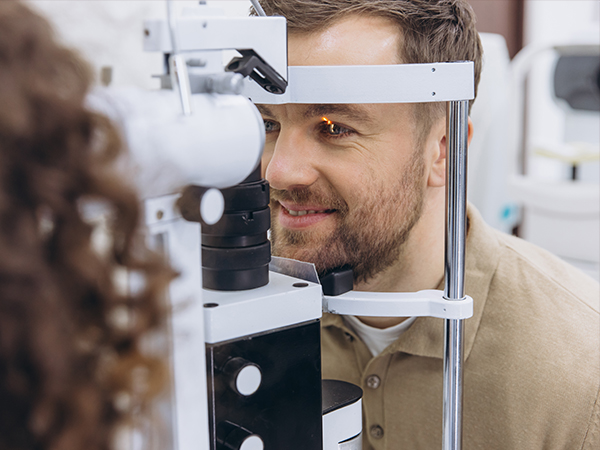
A neuro-optometric evaluation goes beyond a regular eye exam. It involves in-depth testing to analyze the communication between the brain and the visual system, and how deficits affect your daily tasks, such as reading, balance and movement, and more.
Successful treatment can be life-changing, so if you or someone you care about is still having trouble after a concussion, make sure their visual function is fully tested.
Common Post-Concussion Symptoms
Symptoms may vary among individuals post-concussion, but some typical symptoms include:
- Dizziness
- Nausea
- Difficulty with balance, coordination
- Difficulty reading
- Difficulty focusing
- Sensitivity to light
- Poor depth perception
- Headaches/migraines
- Double vision
Unless treated effectively, vision problems associated with brain injuries can be disabling and lead to serious consequences, including additional concussions, especially while playing sports. Common vision problems that may occur following brain injury include:
- Eye focusing – Your vision may become blurred or the ability to shift focus between objects between near and far distances may be imperiled.
- Eye teaming – Your eyes may not work together as a team, causing double vision.
- Eye movements – While reading or trying to follow a moving object you may experience difficulty with eye movements. A common complaint is losing your place while reading.
- Motion sensitivity – It may be difficult to process motion properly due to a disruption between the visual and balance systems. Symptoms can include motion sickness, disorientation, and even dizziness when scrolling on a computer screen or phone, or when in busy environments such as grocery stores, malls, or stadiums.
Balance is achieved and maintained by a complex set of sensorimotor systems that include the vision (sight), proprioception (touch), and the vestibular system. When any of these systems are not functioning properly you can experience motion sensitivity symptoms.
Vision problems that occur after a concussion can range from subtle to dramatic.
How Can Neuro-Optometric Rehabilitation Help?
Since every injury is unique, treatments will vary by individual.
Below are some types of treatments:
- Vision Therapy – This is a customized program that improves the communication between your eyes, brain, and body. The training focuses on improving visual skills such as depth perception, hand-eye coordination, eye tracking, focusing, and peripheral vision.
- Specific Prescription Lenses (Glasses) – These lenses help compensate for the damage done to the neural system along with enhancing visual clarity and comfort. Lens filters provide help with glare and light sensitivity.
- Prism Lenses – These specialized glasses change the way light enters the eye. Prisms are frequently prescribed as part of vision therapy for binocular vision problems to eliminate double vision. In addition, prisms are often used to treat poor balance, which is a common symptom post-concussion.
- Patching – Placing a patch on one eye or part of the visual field of one eye helps eliminate double vision. The patch is often placed directly upon the surface of the lens.
Following a concussion or other brain injury, a tailored neuro-optometric rehabilitation program can offer help specific to your particular situation. Contact Niwot Eyecare and Vision Therapy to learn more about neuro-optometric rehabilitation for Post Trauma Vision Syndrome.
Our practice serves patients from Niwot, Longmont, Boulder, and Erie, Colorado and surrounding communities.
Helpful Articles
article_category: products
article_category: psychiatry
article_category: faqs
article_category: cats
article_category: general
article_category: services
article_category: technology
article_category: dogs
article_category: restorative
article_category: vision therapy
article_category: contact lenses
article_category: health
article_category: conditions
article_category: eye surgery co-management
article_category: exotic
article_category: cosmetic
article_category: surgical procedures
article_category: aesthetics
article_category: preventative
article_category: ocular disease management
article_category: eyeglasses
article_category: eye health
article_category: large animal
[]
article_category: psychiatry
article_category: faqs
article_category: cats
article_category: general
article_category: services
article_category: technology
article_category: dogs
article_category: restorative
article_category: vision therapy
article_category: contact lenses
article_category: health
article_category: conditions
article_category: eye surgery co-management
article_category: exotic
article_category: cosmetic
article_category: surgical procedures
article_category: aesthetics
article_category: preventative
article_category: ocular disease management
article_category: eyeglasses
article_category: eye health
article_category: large animal
[]
Flowbite is an open-source library of interactive components built on top of Tailwind CSS including buttons, dropdowns, modals, navbars, and more.
Check out this guide to learn how to get started and start developing websites even faster with components on top of Tailwind CSS.
All Eye Care Services
Find personalized eye care excellence with our comprehensive services. From eye exams to advanced diagnostics, trust us for all your vision needs.

Keep In Touch
For non-urgent questions or to learn more about our services, contact us today!
© 2026 Niwot Eyecare & Vision Therapy . All rights Reserved - Accessibility Statement - Privacy Policy - Sitemap
Managed and Designed by 